
Published
Sep 20, 2026Mwaiwathu Irrigation Scheme: A Story of Resilience and Innovation in the Face of Climate Change
Name: Jack Chamasowa
Age: 38
Profession: Farmer, Secretary of Mwaiwathu Irrigation Scheme
Location: GVH Muhatere, T/A Ngokwe, Machinga District,Malawi
Household: Married with five dependents
Throughout the years in T/A Ngokwe within Machinga District, small-scale farmers have been facing the harsh impacts of climate change, with severe occurrences such as Cyclones Ana and Gombe in 2022, followed by Cyclone Freddy in 2023, and the dry spells of the 2023/2024 season. These recurring shocks have made communities increasingly vulnerable to food insecurity and livelihood disruptions. Yet, amidst these challenges, a remarkable story of resilience and innovation has emerged through the Climate Just Communities (CJC) Project, implemented by OSSEDI with technical support from DAI and funding from the Scottish Government.
The Mwaiwathu Irrigation Scheme, established in 2017, began with 35 community members and has now grown to 50 comprising 34 women and 16 men, including one individual with a disability. Together, they revitalized 15 hectares of land, initiating winter crop cultivation and small-scale fishery operations. Despite early struggles with resource limitations and lack of technical capacity, their persistence paved the way for transformation once the CJC project came on board.
One standout member, Mr. Jack Chamasowa, a 38-year-old father of four and the scheme’s secretary, embodies the transformation. Before CJC’s intervention, Jack and his fellow farmers depended on unreliable rain-fed agriculture, which frequently led to food shortages and poor yields. Their ponds were silted, and the absence of irrigation equipment and technical know-how left them operating merely at subsistence level.
Jack recalls those difficult days vividly: “There was always a shortage of food, and variety was something we only dreamed of,” he shares. “Still, we held onto hope that one day our hard work would attract support to change our situation.”
When the CJC project selected Mwaiwathu Scheme as a partner, tangible changes began to unfold. The project introduced orange-fleshed sweet potato (OFSP) vines, fertilizers, and early maturing maize seeds, alongside practical training on sustainable practices like Mbeya manure production to enhance soil fertility. These efforts bore fruit Jack’s maize yield doubled, and as a group, they harvested 42 bags of maize, with Jack himself producing 10 bags individually. The income from half of his produce (worth MWK 120,000) helped him diversify into small poultry farming, while the rest sustained his household.
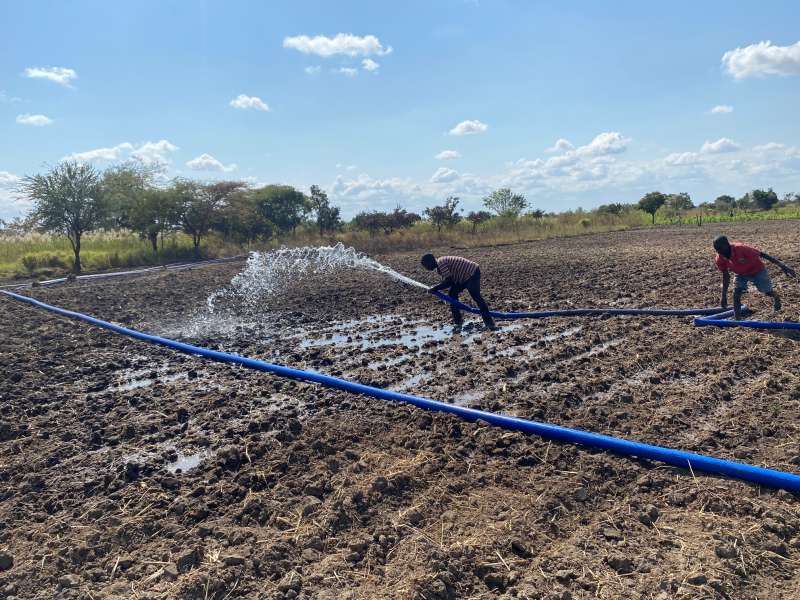
Beyond crop production, the project recognized the potential in the scheme’s fishponds, which had remained underutilized. Through CJC support, the ponds are being rehabilitated and equipped with a solar-powered water pump and panels to ensure reliable irrigation. In 2025, OSSEDI provided the group with certified maize seed and two bags of fertilizer for dry-season farming an initiative that expanded their agricultural output and resilience.
The farmers also participated in cash for work activities to restore and expand their ponds, ensuring ownership and sustainability of their progress. Once the rehabilitation is completed, CJC will supply fingerlings and livestock to strengthen the group’s integrated farming systems linking nutrition, income, and ecosystem health.
“This support is the kind that grows rapidly,” Jack explains. “From sweet potatoes to fish, chickens, and irrigated maize we’re building a system where everything supports everything else.”
By 2024, Mwaiwathu had made impressive strides. Maize harvests increased by over 40%, and the group collectively produced 2,854 kilograms of OFSP, generating a total income of MWK 856,000. Members now manage individual plots cultivated from shared vines and maintain a vibrant vine multiplication system to sustain future planting seasons.
In 2025, the story of Mwaiwathu reached new heights through integrated goat-fish farming, marking another milestone in climate-smart agricultural innovation. The group is expanding their existing ponds from 500 square meters to 1,000 square meters and supported 16 households with five goats each laying the groundwork for an integrated system where livestock manure enriches fishpond productivity, and fish waste supports crop nutrition.
Moreover, the scheme was successfully linked to the National Economic Empowerment Fund (NEEF) under CJC’s Market Systems Development approach, strengthening their access to inputs, finance, and technology. Through this linkage, the group secured a solar-powered water pump and substantial agricultural inputs 500 kg of maize seed, 2,500 kg of NPK, and 2,500 kg of UREA fertilizer which have since been utilized to cultivate 10 hectares of irrigated land at the scheme.
Today, Mwaiwathu stands as a thriving example of how community driven resilience, when coupled with targeted support, can transform livelihoods. Jack and his fellow farmers are no longer at the mercy of unpredictable weather patterns; instead, they are active stewards of a sustainable, diversified, and self-reliant agricultural system.
Reflecting on their journey, Jack concludes with pride: “CJC didn’t just deliver resources; it opened our eyes to what’s possible. We’ve learned to rely not on chance or weather, but on innovation, teamwork, and the knowledge we share as a community.”